SKY Group shares insights from international aviation conferences, highlighting three phases in the industry’s transition towards “Intelligent Aviation.” The first, Analyze & Predict, focuses on connecting and analysing information through an Aviation Data Hub to support forecasting and operational decisions. The second, Personalized Services & Predictive Intelligence, uses AI to deliver more personalised services and support proactive maintenance planning. The third, Empowered – Autonomous Airport, brings together automation, biometrics and robotics to support airport operations and more seamless passenger journeys. SKY sees opportunities to apply these technologies to strengthen Thailand’s aviation infrastructure and support its development as a Regional Aviation Hub.

Mr. Sithidej Mayalarp, Chief Executive Officer of SKY ICT Public Company Limited (SKY), said that the company participated in international aviation conferences in Singapore and Greece during the third quarter. Discussions with global aviation stakeholders reinforced SKY’s view that the aviation and air transport industries are undergoing a significant transformation.
The industry is moving towards Intelligent Aviation, integrating data, Agentic AI, automation, robotics and biometrics to enable technologies and operational processes to work together more effectively.

Three Phases Towards Intelligent Aviation
The first phase, Analyze & Predict, centres on developing an Aviation Data Hub as an integrated data platform. By bringing together information from stakeholders across the airport ecosystem, the platform enables large-scale data analysis to support faster, better-informed decisions.
The second phase, Personalized Services & Predictive Intelligence, focuses on using Agentic AI to analyse aviation data and deliver services tailored to individual passenger needs. Passenger behaviour and service preferences can inform relevant recommendations, such as products and promotions aligned with personal interests or services suited to a passenger’s destination and itinerary.
This phase also strengthens predictive operational capabilities. AI can analyse operational and aircraft technical data to identify potential risks and support proactive maintenance planning, helping maintenance teams address emerging issues and improve operational reliability and safety.
The third phase, Empowered – Autonomous Airport, focuses on combining automation with data and AI to support airport management. Applications include biometric passenger processing, humanoid robots and other robotic systems designed to support more seamless passenger journeys.
“The industry is placing greater emphasis on connecting data from multiple stakeholders so that organisations can see the bigger picture and coordinate their operations more effectively,” said Mr. Mayalarp.
“Another priority is applying automation to airport services and operations to help airports accommodate growing passenger demand. Examples include humanoid robots that provide passenger information and guidance, as well as conventional robots that assist with handling baggage and parcels within airport conveyor systems.”
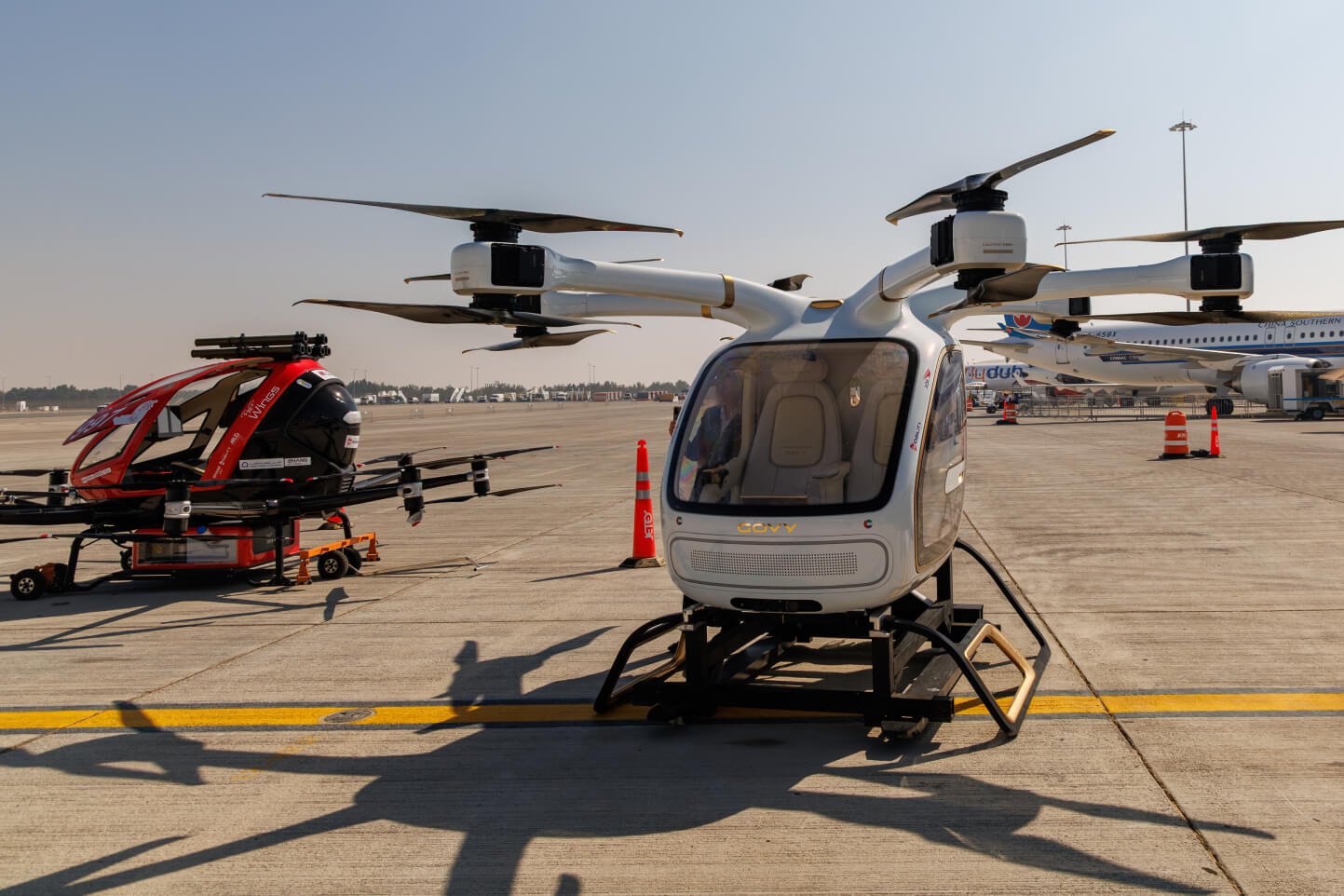
Mr. Mayalarp also highlighted electric vertical take-off and landing (eVTOL) aircraft as an emerging area of opportunity. Potential applications include passenger transport, cargo delivery to hard-to-reach locations and emergency response.

Supporting Thailand’s Role as a Regional Aviation Hub
Mr. Mayalarp added that these developments present opportunities for Thailand to strengthen its position as a Regional Aviation Hub, supported by digital technology adoption and continued investment in aviation infrastructure.
He pointed to developments at Suvarnabhumi Airport, including the SAT-1 satellite terminal and third runway, alongside plans for further development at Don Mueang Airport and U-Tapao Airport in the Eastern Economic Corridor (EEC).
Thailand’s geographical position also provides connections between East Asia, South Asia, Europe and Australia, supporting its potential as both a transit hub and an air cargo hub.
“Over the past decade, SKY has remained committed to bringing intelligent technologies to Thai airports,” said Mr. Mayalarp.
“Our solutions include the Common Use Passenger Processing System (CUPPS), Advance Passenger Processing System (APPS), Common Use Bag Drop (CUBD), Self-Boarding Gates (SBG) and biometric technology. Together, these capabilities support Thailand’s development as a Regional Aviation Hub.
“Towards the end of the year, SKY plans to pilot additional intelligent technologies, including humanoid robots for passenger services at Suvarnabhumi Airport. We are also developing an intelligent operations centre to improve the efficiency of ground operations.”


